Translate

Wednesday, 24 February 2016

Liver Cancer : Symptom, Cause, Diagnosis, Stage, Treatment, And Drug


Liver cancer (Hepatic cancer) is a cancer that originates in the liver.The liver is the largest internal organ.It is located in the upper righ-hand portion of the abdominal cavity, beneath the diaphragm (a sheet of muscle of separating the chest and the abdomen), and on the top of the stomach, righ kidney, and intestines.Primary liver cancer is a cancer that starts in the liver.Secondary liver cancer is cancer that is not found in the liver and it does not start from there, but has spread (metastasized) from somewhere else, such as the pancreas, colon, stomach, breast, or lung.


The functions of liver
  • Liver breaks down and stores many of the nutrients absorbed from the intestine that the body needs to function
  • It secretes bile into the intestines to absorb nutrients, especially fats.
  • Liver filters out and break down toxic wastes in the blood, which are then removed from the body.
  • It makes most of the clotting factors that keep from bleeding too much.


The Types Of Primary Liver Cancer
  • Hepatocellular Cancer (HCC/ Hepatocellular Carcinoma) can have different the patterns of growth, including some begin as a single tumor that grows larger.Only late in the disease does it spreads to other parts of the liver and a second type seems to start as many small cancer nodules throughout the liver, not just a single tumor.
  • Intrahepatic Cholangiocarcinoma ( Bile duct cancer) starts in the cells that line the small bile ducts (tubes that carry bile to gallbladder) within the liver.
  • Angiosarcoma and Hemangiosarcoma are rare cancers that begin in cells lining the blood vessels of the liver.
  • Hepatoblastoma is a very rare kind of cancer that develops in children, usually in those younger than four years old.


The Symptoms of Liver Cancer
  • Pain in the abdomen or near the righ shoulder blade.
  • Swelling or fluid buil-up in the abdomen.
  • Yellow skin and whites of the eyes (jaundice).
  • Unexplained weight loss.
  • Nausea or vimiting.
  • Loss of appetite.
  • Itching.
  • Feeling of fullness.
  • Enlarged liver, felt as a mass under the ribs on the right side.
  • Enlarged spleen, felt as a mass under the ribs on the left side.


Causes of Liver Cancer
  • Viral infection either hepatitis C virus or hepatitis B virus
  • Virus-related cirrhosis
  • Heavy Alcohol intake
  • Aflatoxin exposure (Fungi Aspergillus flavus and Aspergillus parasiticus)
  • Tobacco smoking
  • High grade dysplastic nodules
  • Obesity
  • Diabetes
  • Liver fluke infection
  • Gender
  • Race
  • Inherited metabolic disease
  • Vinyl chloride and thorium dioxide
  • Anabolic steroids
  • Arsenic
  • Birth control pills


Diagnosis

There are some tests and procedures to diagnose the liver cancer, including imaging tests, lab tests and procedure.If patients have signs or symptoms of liver cancer, doctor will find it by doing procedures and tests as follow :
  • Medical history and physical exam.
  • Ultrasound  is the first test to look at the liver.
  • Computed Tomography scan (CT scan) is an x-ray test that produce detailed cross-sectional images of the body.It can provide precise information about the size, shape, and position of any tumors in the liver or elsewhere in the abdomen and nearby blood vessels.
  • Magnetic Resonance Imaging (MRI) provides detailed images of soft tissues in the body.
  • Angiography is an x-ray test that look at blood vessels.
  • A Bone Scan helps in looking for cancer that has spread (metastasized) to bones.
  • Laparoscopy is a procedure that inserts a thin, lighted tube with a small video camera on the end through a small incision (cut) in the front of the abdomen to look at the liver and other internal organs.
  • Biopsy is the removal of a sample of tissue to see if it is cancer.
  • Needle biopsy is a hollow needle that is placed through the skin in the abdomen and into the liver.A fine needle aspiration biopsy sucks tumor cells into a very thin needle with a syringe.A core needle biopsy uses a slightly larger needle to get a bigger sample.
  • Laparoscopic biopsy is to see the surface of the liver and take sample of abnormal-appearing areas.
  • Surgical biopsy is to remove tumor.An incisional biopsy is to remove a piece of the tumor.An excisional biopsy is to remove the entire tumor and some surrounding normal liver tissue during an operation.
  • Magnetic Resonance Cholangiopancreatography (MRCP)
  • Endoscopic Retrograde Cholangiopancreatography (ERCP)

Lab Tests
  • Alpha-Fetoprotein Blood (AFP) test is a protein that is normally present at high levels in the blood of fetuses but goes down to low levels shortly after birth.

Blood Tests
  • Liver Function Test is to know the condition of the liver before starting the treatment.
  • Blood Clotting Test.The liver makes protein that help blood clot when bleeding.
  • Complete Blood Count is to measure the levels of red blood cells (which carry oxygen throughout the body), white blood cells (which fight infections), and platelets (which help the blood clot).
  • Blood Chemistry Test is to check the levels of a number of minerals and other substances in the blood, some of which might be affected by liver cancer.


The Stage of Liver Cancer

  • The Stage I : There is a single tumor (any size) that has not grown into any blood vessels.The cancer has not spread to nearby lymph nodes or distant sites.


  • The Stage II : Either there is a single tumor (any size) that has not grown into any blood vessels or  there are several tumors, and all are 5 centimeters (2 inches) or less across.The cancer has not spread to nearby lymph nodes or distant sites.


  • The Stage IIIA : There is more than one tumor and at least one is larger then 5 centimeters (2 inches) across.The cancer has not spread to nearby lymph nodes or distant sites.


  • The Stage IIIB : At least one tumor is growing into a branch of a major vein of the liver (portal vein or hepatic vein).The cancer has not spread to nearby lymph nodes or distant sites.
  • The Stage IIIC : A tumor is growing into a nearby organ (other than the gallbladder) or a tumor has grown into the outer covering of the liver.The cancer has not spread to nearby lymph nodes or distant sites.
  • The Stage IVA : Tumors in the liver can be any size or number and they may have grown into blood vessels or nearby organs.The cancer has spread to nearby lymph nodes.The cancer has not spread to distant sites.


  • The Stage IVB : The cancer has spread to other parts of the body (Tumors can be any size or number and nearby lymph nodes may or may not be involved).


The Treatment of Liver Cancer

I. The Treatments of Hepatocellular Cancer include
  • Surgical Resection
  • Liver transplantation
  • Precutaneous ablation is the only non-surgical treatment that can offer cure.The forms of precutaneous ablation consist of injecting chemicals into the liver (ethanol or acetic acid) and producing extreme of temperature using radio frequency ablation, microwaves, lasers or cryotherapy
  • Local chemotherapy may be used in a procedure known as transarterial chemoembolization.This procedure, cytotoxic drugs, such as doxorubicin or cisplatin with lipiodol are administered and the arteries supplying the liver are blocked by gelatin sponge or other particles.
  • Targeted therapy drug (sorafenib) prevents cell proliferation and blood cell growth.
  • Radiotherapy.

II. The Treatments of Intrahepatic Cholangiocarcinoma include

  • Surgical Resection
  • Liver Transplantation
  • Adjuvant Chemoradiation
  • Photodynamic Therapy is a novel treatment that utilitizes light activated molecules to treat the tumor.It can be used to improve quality of life and survival time in these unresectable cases.
  • Systemic Chemotheraphy, such as gemcitabine and cisplatin is used in inoperable cases of cholangiocarcinoma.
  • Radio Frequency Ablation
  • Transarterial Chemoembolization
  • Internal Radiotherapy (Brachytherapy)
  • Radiotherapy

III. The Treatments of Hepatoblastoma include

  • Surgical Resection
  • Liver Transplantation
  • Chemotherapy, including cisplatin, vincristine, cyclophosphamide, and doxorubicin are used for the systemic treatment of hepatoblastoma.


Drugs for Liver Cancer
  • Cisplatin
  • Sorafenib
  • Gemcitabine
  • Vincristine
  • Cyclophosphamide
  • Doxorubicin


Pancreatic Cancer : Symptom, Risk Factor, Stage, Treatment, And Drug


Pancreatic cancer arises when cells in the pancreas, a glandular organ behind the stomach, begin to multiply out of control and form a mass.The pancreas lies behind the stomach and in front of the spine.Cancer spreads through tissue, the lymph system, and the blood.Metastasis is cancer that spreads to another part of the body.

There are two kinds of cells in the pancreas :
  • Exocrine pancreas cells make enzymes that are released into the small intestine to help the body digest food.
  • Neuroendocrine pancreas cells (Islet cells) make several hormones, includin insulin, gastrin, and glucagon, that help in controlling sugar levels in the blood.


The many types of pancreatic cancer can be divided into two general groups :
  • Exocrine Pancreatic Cancer arises in the pancreatic ductal epithelium.It originates in the ducts that carry secretions, such as enzyme and bicarbonate away from pancreas.
  • Pancreatic Neuroendocrine Tumor arises from the body's neuroendocrine cells, which are responsible for integrating the nervous and endocrine systems.


The Symptoms of Pancreatic Cancer 
  • Pain in the upper abdomen or back, often spreading from around the stomach to the back.
  • Loss of appetite
  • Unexplained weight loss
  • Jaundice, a yellow tint to the whites of the eyes or skin with or without pain, and possible in combination with darkened urine
  • Nausea
  • Constipation
  • Vomiting
  • Feeling of fullness
  • Weakness
  • Dry mouth
  • Tiredness easily
  • The problem of sleeping
  • Palpable abdominal mass
  • Itching
  • Enlarged liver and gallbladder
  • Blood clots in the legs
  • Mental status changes, such as a new onset of depression
  • Black or bloody stool indicating bleeding from the digestive tract


The Risk Factors of Pancreatic Cancer
  • Family history of pancreatic cancer
  • Age
  • Gender
  • Ethnicity
  • Obesity
  • Tobacco smoking
  • Diabetes mellitus
  • Chronic pancreatitis
  • Dietary factor (processed meat, red meat cooked by high temperature)

The pancreatic cancer symptoms at diagnosis vary according to the location of cancer in the pancreas, which anatomists divide into thick head, the neck, and the tapering body, ending in the tail.
The Tests to diagnose pancreatic cancer :
  • Medical Imaging techniques include Computed Tomography scan (CT scan) and Endoscopic Ultrasound (EUS) are to decide whether tumor can be removed surgically (its resectability).
  • Magnetic Resonance Imaging (MRI) is a procedure that uses a magnet, radio, wave, and computer to make a series of detailed pictures of areas inside the body.
  • Positron Emission Tomography (PET) is a procedure to find malignant tumor cells in the body.
  • Magnetic Resonance Cholangiopancreatography
  • Abdominal Ultrasound is a procedure in which high-energy sound waves (ultrasound) are bounced off internal tissues or organs of abdomen and make echoes.
  • A biopsy by fine needle Aspiration
  • Liver function test is a test in which a blood sample is checked to measure the amounts of certain substances released into the blood by the liver.

The Stage of Pancreatic Cancer :
  • Stage 0 (Carcinoma in situ) : Abnormal cells are found in the lining of pancreas.These abnormal cells may become cancer and spread into nearby normal tissue.
  • Stage IA : The tumor is 2 centimeters or smaller.


  • Stage IB : The tumor is larger than 2 centimeters.


  • Stage IIA : Cancer has spread to nearby tissue and organs but has not spread nearby lymph nodes.


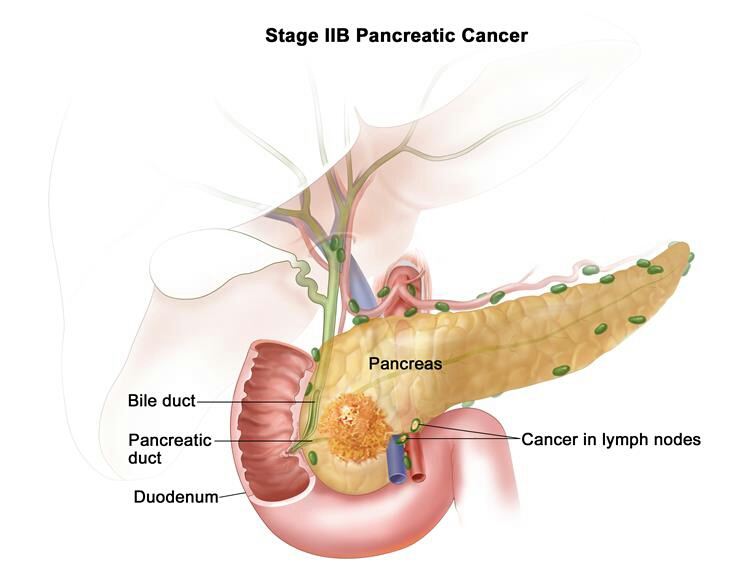
  • Stage IIB : Cancer has spread to nearby lymph nodes and may have spread to nearby tissue and organs.

  • Stage III : Cancer has spread to the major blood vessels near the pancreas.These include the superior mesenteric artery, celiac axis, common hepatic artery, and portal vein.Cancer may have spread to nearby lymph nodes.


  • Stage IV : Cancer may be any size and has spread to distant organs, such as the lung, liver, and peritoneal cavity (the space in the abdomen that contains intestines, stomach, and liver).Cancer may also have spread to tissue and organs near the pancreas or lymph nodes.


Treatment Options of Pancreatic Cancer Stage

I. The Treatment of Stage I and Stage II include

  • Surgery.
  • Surgery followed by chemotherapy.
  • Surgery followed by chemoradiation.
  • A clinical trial of combination chemotherapy.
  • A clinical trial of chemotherapy and targeted therapy with or without chemoradiation.
  • A clinical trial of chemotherapy and/or radiation therapy before surgery.
II. The Treatment of Stage III includes

  • Palliative surgery or stent placement to bypass blocked areas in ducts or the small intestine.
  • Chemotherapy folowed by chemoradiation
  • Chemoradiation followed by chemotherapy
  • A clinical trial of new anticancer therapies together with chemotherapy or chemoradiation.
  • A clinical trial of radiation therapy given during surgery or internal radiation therapy.
III. Treatment of Stage IV includes
  • Palliative treatments to relieve pain, such as nerve blocks and other supportive care.
  • Palliative surgery or stent placement to bypass blocked areas in ducts or the small intestine.
  • Chemotherapy with or without targeted therapy.
  • A clinical trial of new anticancer agents with or without chemotherapy.


The Standard Treatments of Pancreatic Cancer

1. Surgery is to take out the tumor.
  • Whipple procedure is a surgical procedure in which the head of the pancreas, the gallbladder, part of the stomach, part of small intestine and the bile duct are removed.
  • Total pancreatectomy is the operation to remove the whole pancreaspart of the stomach, part of small intestine, the common bile duct , the gallbladder, the spleen, and nearby lymph nodes.
  • Distal pancreatectomy is the body and the tail of the pancreas and the spleen are removed
Palliative surgery is used  to relieve symptoms and improve the quality of live and  is done if cancer has spread and cannot be removed.
  • Surgical biliary bypass is used if the cancer is blocking the small intestine. A biliary by pass may be done if Bile is building up in the gallbladder.
  • Endoscopic stent placement is used if the tumor is blocking the bile duct.Surgery may be done to put a stent (a thin tube) to drain bile that has built up in the area.
  • Gastric bypass is used if the tumor is blocking the flow of food from the stomach.The stomach may be sewn directly to the small intestine in order to eat normally.
2. Radiation Theraphy is a cancer treatment that uses high-energy x-rays or other types of radiation to kill cancer cells or keep them from growing.
Types of radiation therapy :
  • External radiation therapy uses a machine outside the body to send radiation toward the cancer.
  • Internal radiation therapy uses a radioactive subtance sealed in needles, seeds, wires, or catheters that are placed directly into or near the cancer.
3. Chemotherapy is a cancer treatment that uses drugs to stop the growth of cancer cells, either by killing the cells or stopping them from dividing.

4. Chemoradiation therapy is the combination of chemotherapy and radiation therapy to increase the effect of both.

5.Targeted Therapy is a type of treatment that uses drugs or other substances to identify and attack specific cancer cells without harming normal cells.Tyrosine kinase inhibitor (TKIs) are targeted therapy drugs that blocks signals needed for tumors to grow.Erlotinib is a type of tyrosine kinase inhibitors to treat pancreatic cancer.

6. Biologic Therapy (Biotheraphy) is a treatment that uses the patient's immune system to fight cancer.


The Drugs for Pancreatic Cancer

  • Abraxane (Paclitaxel Albumin-stabilized Nanoparticle Formulation)
  • Afinitor (Everolimus)
  • Erlotinib Hydrochloride
  • Everolimus
  • 5-FU (Fluorouracil injection)
  • Fluorouracil injection
  • Gemcitabine Hydrochloride
  • Gemzar (Gemcitabine Hydrochloride)
  • Irinotecan Hydrochloride Liposome
  • Mitomycin C
  • Mitozytrex (Mitomycin C)
  • Mutamycin (Mitomycin C)
  • Onivyde (Irinotecan Hydrochloride Liposome)
  • Paclitaxel Albumin-stabilized Nanoparticle Formulation
  • Sunitinib Malate
  • Sutent (Sunitinib Malate)
  • Tarceva (Erlotinib Hydrochloride)


Drug combinations used in Pancreatic Cancer
  • Folfirinox
  • Gemcitabine-Cisplatin
  • Gemcitabine-Oxaliplatin


Drugs approved for Gastroenteropancreatic Neuroendoctrine Tumor
  • Lanreotide Acetate
  • Somatuline Depot (Lanreotide Acetate)


Tuesday, 23 February 2016

Kidney Cancer : Type, Symptom, Risk Factor, Stage,Treatment, And Drug


Kidney cancer (Renal Cancer) is a type of cancer that starts from the cells of the kidney.The changes of DNA in cells cause kidney cancer.The kidneys are a pair of bean-shaped organs, each about the size of a fist.One kidney is in the left and another in the right of the backbone.Kidneys are attached to the upper back wall of the abdomen.They control blood pressure by making a hormone called renin and make sure the body to have enough red blood cells by making a hormone called erythropoietin.This hormone tells the bone marrow to make more red blood cells.Kidney cancer originates in the kidney, such as the renal tubule and the renal pelvis.Primary cancer is a cancer that has formed in an organ (kidney) but has not spread elsewhere. Secondary cancer or metastases cancer is a cancer that has formed somewhere else in the body.Most kidney cancers do not cause pain until the advanced stages when they have started to spread.


There two common types of kidney cancer :
  • Renal Cell Carcinoma (RCC)


  • Transitional Cell Carcinoma (TCC) or Urothelial Cell Carcinoma (UCC) of the renal pelvis

The other types of kidney cancer
  • Squamous cell carcinoma
  • Angiomyolipoma
  • Clear-cell sarcoma of the kidney
  • Bellini duct carcinoma
  • Juxtaglomerular cell tumor (reninoma)
  • Mesoblastic nephroma
  • Wilm's tumor
  • Mixed epithelial stromal tumor
  • Transitional cell carcinoma
  • Clear cell adenocarcinoma
  • Inverted papilloma
  • Renal lymphoma
  • Teratoma
  • Carcinosarcoma
  • Carcinoid tumor of the renal pelvis


The Symptoms of Kidney cancer
  • Blood in the urine or the changes in urine colour to dark, rusty or brown
  • Loss of appetite
  • Weight loss
  • Tiredness
  • Heavy sweating
  • Fever
  • Newly developed high blood pressure
  • Lower back, abdominal or flank pain that is not linked with to an injury

The Risk Factors of Kidney Cancer
  • Family history of kidney cancer
  • Age
  • Gender
  • Smoking
  • Obesity
  • Hypertension
  • Kidney stones
  • Genetic
  • Occupational exposure to toxic compounds
  • Long-term dialysis and acquired cystic disease
  • Regular use of NSAIDs, such as ibuprofen and naproxen


Diagnosis

The Common Tests to diagnose the kidney cancer
  • Ultrasound is a type of scan where a probe slides over the skin allowing the X-Ray team to look for the irregularities in the kidney and other organs.


  • Scans are Computed Tomography (CT) scan and Magnetic Resonance Imaging (MRI) scan can provide detailed pictures of organs in the body.This can help in characterizing a lump in the kidney, if one is found.


  • Chest X-Ray is an x-ray of organs and bones within the chest.
  • Urine Test is to detect other irregularities in the urine, such as protein.
  • Blood Tests are chemichal tests of blood to detect findings associated with kidney cancer.
  • Intravenous Pyelogram (IVP) is a dye that is injected into a vein.X-Rays are used to map its path through kidneys and into the urine.
  • Cytoscopy is a test that checks the baldder and urethra for cancers, using a telescope with lens and light that is placed into the bladder through the urethra.
  • Bone scan is a small amount of radioactive material that is injected into a vein and travels through bloodstream to the bones so that the scanner can detect if the cancer has spread to the bones.

There are two types of kidney cancer staging
  • The Clinical stage is based on the results of the physical exam, lab tests, and any imaging tests.
  • The Phatologic stage is based on the same factors as the clinical stage, the findinfs during surgery, and examination of the removed tissue.


The Stage of Kidney Cancer
  • Stage I : Tumor is 7 cm across or smaller and is only in the kidney.There is no spread to lymph nodes or distant organs.


  • Stage II : Tumor is larger than 7 cm across but is still only in the kidney.There is no spread to lymph nodes or distant organs.


  • Stage III : The tumor is growing into  a major pain (the renal vein or the vena cava) or into tissue around the kidney but it is not growing into the adrenal gland or beyond Getota's fascia.There is no spread to lymph nodes or distant organs.Or The main tumor can be any size and may have grown outside the kidney.It has not spread beyond Getota's fascia.It has spread to nearby lymph nodes but has not spread to distant lymph nodes or other organs.


  • Stage IV : The main tumor is growing  beyond Gerota's fascia and may be growing into the adrenal gland on top of the kidney.It may or may not have spread to nearby the lymph nodes.It has not spread to distant lymph nodes or other organs.Or The main tumor can be any size and may have grown outside the kidney.It may or may not have spread to nearby lymph nodes.It has spread to distant lymph nodes and/or other organs.


There are different types of kidney cancer treatment
  • A Urologist is a surgeon who specializes in treating disease of the urinary system (male productive system)
  • A Radiation Oncologist is a doctor who treats cancer with radiation theraphy
  • A Medical Oncologist is  a doctor who treats cancer with medicines, such as chemotherapy.

The treatment of kidney cancer depends on the type and the stage of disease.Some Treatments of Kidney Cancer :
  • Surgery or nephrectomy is the removal of kidney tumor.
  • Active Surveillance
  • Radiation Therapy
  • Targeted Therapy
  • Radiofrequency ablation is to burn the tumor away.
  • Cryotherapy is to freeze the tumor away.
  • Adjuvant therapy is to improve survival in kidney cancer.
  • Immunotherapy is to induce complete remissions or durable partial remissions in some patients.
  • Bioligical therapies (drug treatments) are to use natural substances from the body.
  • Chemotherapy

Wilm's tumor is a type of kidney cancer that affect children( under the age of 5).Its treatments use chemotherapy, radiotherapy and surgery depending the stage of disease.


The Drugs for Kidney Cancer :
  • Everolimus (Afinitor)
  • Temsirolimus (Torisel)
  • Sorafenib (Nexavar)
  • Sunitinib (Sutent)
  • Axitinib (Inlyta)
  • Interferon (immunotherapy)
  • Interleukin-2 (immunotherapy)

IMA901 is used to treat patients with kidney cancers.
IMA901 is composed of ten synthetic tumor-associated peptides (TUMAP's ), which activate the body's own killer T-cells against the tumor.This process targets the body's immune responses and mobilizes them to attack cancer.


    Leukemia :Type, Symptom, Risk factor, Stage, Treatment, And Drug


    Leukemia is cancer of blood cells that usually begin in the bone marrow and result in high numbers of abnormal white blood cells.Bone marrow is the soft inner part of bones.New blood cells, such as red blood cells, white blood cells, and platelets are made in the bone marrow.It is found mainly in the flat bones, including skull, shoulder, blades, ribs, hip bones and vertebrae in the teen-agers.In infants, it is found in almost all bones of the body.

    The types of blood cells :
    • Red blood cells carry oxygen from the lungs to all other tissues in the body and take carbon dioxide back to the lungs to be removed.
    • Platelets are cell fragments made by a type of bone marrow cell called the Megakaryocyte.They are important to stop bleeding by plugging up holes in the blood vessels.
    • White blood cells help the body fight against infections

    Types of White blood cells :

    1. Lymphocytes are mature, infection-fighting cells that develop from lymphoblasts, a type of blood stem cell in the bone marrow.
    There are two types of lymphocytes :
    • B Lymphocytes (B cells) help in protecting the body against germs, such as bacteria and viruses.They make proteins called antibodies that attach to the germ.
    • T Lymphocytes (T cells) help in protecting the body against germs.Some types of T cells destroy germ directly.
    2. Granulocytes are mature, infection-fighting cells that develop from myeloblasts, a type of blood-forming cell in the bone marrow.

    3. Monocytes develop from blood-forming monoblasts in the bone marrow and are related to granulocytes.


    The Specific Types of Leukemia
    • Acute Lymphoblastic Leukemia (ALL) is the most common type of leukemia in young children and affects adults  over the age of 65.


    • Chronic Lymphocytic Leukemia (CLL) affects adults over the age of 55 and sometimes occurs in younger adults.


    • Acute Myelogeneous Leukemia (AML) occurs commonly in adult men than in adult women and in children


    • Chronic Myelogeneous Leukemia (CML) occurs mainly in adults and very small number in children.


    • Hairy cell Leukemia (HCL) affects adult men.
    • T-Cell Prolymphocytic Leukemia (T-PLL) affects more adult men than adult women.
    • Large Granular Lymphocytic Leukemia is a rare and indolent leukemia.
    • Adult-T Cell Leukemia is caused by human T- lymphotropic virus (HTLV), a virus similar to HIV.

    The General Classification of Leukemia :
    • Acute Leukemia is characterized by a rapid increase in the number of immature blood cells.
    • Chronic Leukemia is characterized by the excessive build-up of relatively mature, but still abnormal white blood cells.
    • Lymphoblastic or Lymphocytic Leukemia is the cancerous change to take place in a type of marrow cell that normally goes on to form lymphocytes, which are infection-fighting immune system cells.
    • Myeloid or Myelogenous Leukemia is the cancerous change to take place in a type of marrow cell that normally goes on to form red blood cells, some other types of white blood cells and platelests.


    The Symptoms of Leukemia
    • Easy bleeding
    • Easy bruising
    • Fever
    • Feeling tired
    • Weight loss
    • Loss of appetite
    • Fequent infections
    • Swelling of lymph nodes
    • Muscular weakness
    • Joints Pain or tenderness
    • Easy shortness of breath
    • Liver enlargement
    • Night sweats
    • Purplish patches or spots
    • Diarrhea
    • Sores in the mouth
    • Chills
    • Nausea

    The Risk Factors of Leukemia
    • Family history
    • Race or Ethnicity
    • Certain chemichal exposures, such as benzene
    • Radiation exposure, such as atomic bomb
    • Age
    • Gender
    • Certain chemotherapy drugs
    • Tobacco smoking
    • Certain blood disorders
    • Workplace exposures, such as gasoline, diesel
    • Genetic syndromes, such as fanconi anemia, ataxia-telangiectasia
    • Herbicides or pepticides exposure
    • Certain viral infections
    • Chromosome mutations

    The Tests are used in The Staging Process
    • Chest X-Ray is an x-ray of the organs and bones inside the chest.
    • MRI (magnetic resonance imaging) is a procedure that uses a magnet, radio, waves, and a computer to make a series of detailed pictures of areas inside the body.
    • CT Scan (CAT Scan) is a procedure to make a series of detailed pictures of areas inside the body, taken from different angles.
    • PET-CT Scan is a procedure that combines the picture from a positron emission tomography (PET) scan and a computed tomography (CT) scan.
    • Blood Chemistry Studies are a procedure in which a blood sample is checked to measure the ammounts of certain substances released into the blood by organs and tissues in the body.
    • Antiglobulin Test is a test in which a sample of blood is looked at under a microscope to find out if there are any antibodies on the surface of red blood cells and platelets.


    The Stage Of  Chronic Lymphocytic Leukemia
    • Stage 0 : There are too many lymphocytes in the blood, but there are no other signs or symptoms of leukemia.Chronic lymphocytic leukemia is indolent (slow growing).


    • Stage I : There are too many lymphocytes in the blood and the lymph nodes are larger than normal.


    • Stage II : There are too many lymphocytes in the blood,  the liver or spleen is larger than normal, and the lymph nodes may be larger than normal.


    • Stage III : There are too many lymphocytes in the blood,  there are too few red blood cells, and the lymph nodes, the liver or spleen may be larger than normal.


    • Stage IV : There are too many lymphocytes in the blood,  there are too few platelets, and the lymph nodes, the liver or spleen may be larger than normal, and there may be too few red blood cells.


    Stage I, Stage II, Stage III, and Stage IV of Chronic Lymphocytic Leukemia Treatments include :
    • Watchful waiting when there are few or no signs or symptoms.
    • Targeted therapy with a monoclonal antibody or a tyrosine kinase inhibitor.
    • Chemotherapy with one or more drugs,  with or without steroids or monoclonal antibody therapy.
    • Low-dose external radiation therapy to areas of the body where cancer is found, such as the spleen or lymph nodes.
    • A clinical trial of chemotherapy and Biologic therapy with stem cell transplant.
    • A clinical trial of a new treatment.


    Treatment of Leukemia

    I. Acute Lymphoblastic Leukemia (ALL) is treated into several phases :
    • Induction chemotherapy brings about bone marrow remission.Standard induction drug plans for adults, include prednisone, vincristine, anthracycline, L-asparaginase or cyclophosphamide.Standard theraphy is usually used for children with low risk of ALL by using three drugs, such as prednisone, vincristine, and L-asparaginase for the first month of treatment.
    • Consolidation therapy or intensification therapy eliminates any remaining leukemia cells.Patients with low-to average-risk ALL receive therapy with antimetabolite drugs, such as methotrexate and 6-mercaptopurine (6-MP).Patients with high risk of ALL receive higher drug doses of these drugs and additional drugs.
    • CNS Prophylaxis (Preventive theraphy) stops the cancer from spreading to the brain and nervous system in high risk patients.Standard prophylaxis may include radiation of the head and/or drugs delivered directly into the spine.
    • Maintenance treatments with Chemotherapeutic drugs prevent disease recurrence once remission has been achieved.Maintenance therapy involves the lower drug doses and  may continue for up to three years.
    • Allogeneic bone marrow transplantation alternatively may be appropriate for patients with high risk of ALL

    II. Chronic Lymphocytic Leukemia (CLL) is treated based on the stage and the symptoms of the indivual patient.
    The indications for treatments are :
    • Falling hemoglobin or platelet count
    • Progression to a later stage of disease
    • Painful, disease related overgrowth of lymph nodes or spleen
    • An increase in the rate of lymphocyte production.
    The primary chemotherapeutic plan is combination chemotherapy with chlorambucil or cyclophophamide, plus a corticosteroid, such as prednisone or prednisolone.In resistant cases, single-agent treatment with nucleoside drugs such as fludarabine, pentostatin, or cladribine may be successful.Younger patients may consider allogeneic or autologous bone marrow transplantation.


    III. Acute Myelogeneous Leukemia (AML) uses various treatment according to the age of the patient and according to the specific subtype of AML.The oncologists rely on combination of drugs for the initial, induction phase of chemotherapy.Such combination chemotherapy usually offers the benefits of early remission and a lower risk of disease resistance.Consolidation and maintenance treatments are intended to prevent disease recurrence.Consolidation treatment often entails a repetition of induction chemotherapy or the intensification chemotherapy with additional drugs.


    IV. Chronic Myelogeneous Leukemia (CML) uses Imatinib (Gleevec) Therapy.


    V. Hairy cell Leukemia (HCL) uses Typical Treatment Approach.Patients receive one week of cladribine daily by intravenous infusion or a simple injection under the skin, or six month of pentostatin every four weeks by intravenous infusion.Other treatments include rituximab infusion or self-injection with interferon-alpha.


    VI. T-Cell Prolymphocytic Leukemia (T-PLL) is difficult to treat.Alemtuzumab (Campath) is a monoclonal antibody to attack white blood cells.Purine analogues (pentostatin, fludarabine, cladribine), chlorambucil, and various forms of combination chemotherapy, such as cyclophosphamide, doxorubicin, vincristine, prednisone CHOP, cyclophosphamide, vincristine, prednisone (COP), vincristine, doxorubicin, prednisone, etoposide, cyclophosphamide, bleomycin (VAPEC-B) are used for the treatment in certain patients.Some patients successfully respond to undergo stem cell transplantation to consolidate the response.


    VII. Juvenile Myelomonocytic Leukemia is treated by splenectomy, chemotherapy, and bone marrow transplantation.


    The Drugs of Leukemia

    Drugs approved for Acute Lymphoblastic Leukemia (ALL) 
    • Abitrexate (Methotrexate)
    • Arranon (Nelarabine)
    • Asparaginase Erwinia Chrysanthemy
    • Blinatumomab
    • Blincyto (Blinatumomab)
    • Cerubine (Daunorubicin Hydrochloride)
    • Clafen (Cyclophosphamide)
    • Clofarabine
    • Clofarex (Clofarabine)
    • Clolar (Clofarabine)
    • Cyclophosphamide
    • Cytarabine
    • Cytosar-U (Cytarabine)
    • Cytoxan (Cyclophosphamide)
    • Dasatinib
    • Daunorubicin
    • Doxorubicin Hydrochloride
    • Erwinaze (Asparaginase Erwinia Chrysanthemy)
    • Folex (Methotrexate)
    • Folex PFS (Methotrexate)
    • Gleevec (Imatinib Mesylate)
    • Iclusig (Ponatinib Hydrochloride)
    • Imatinib Mesylate
    • Marqibo (Vincristine Sulfate Liposome)
    • Mercaptopurine
    • Methotrexate
    • Methotrexate LPF (Methotrexate)
    • Mexate (Methotrexate)
    • Mexate-AQ (Methotrexate)
    • Nelarabine
    • Neosar (Cyclophophamide)
    • Oncaspar (Pegaspargase)
    • Pegaspargase
    • Ponatinib Hydrochloride
    • Prednisone
    • Purinethol (Mercaptopurine)
    • Purixan (Mercaptopurine)
    • Rubidomycin (Daunorubicin Hydrochloride)
    • Sprycel (Dasatinin)
    • Tarabine PFS (Cytarabine)
    • Vincristine Sulfate
    • Vincasar PFS (Vincristine Sulfate)
    • Vincristine Sulfate Liposome


    Drug Combinations used in Acute Lymphoblastic Leukemia (ALL) 
    • Hyper-CVAD

    Drugs approved for Chronic Lymphocytic Leukemia (CLL)
    • Alemtuzumab
    • Amblochlorin (Chlorambucil)
    • Arzerra (Ofatumumab)
    • Ofatumumab
    • Bendamustine Hydrichloride
    • Campath (Alemtuzumab)
    • Chlorambucil
    • Clafen (Cyclophosphamide)
    • Cytoxan (Cyclophosphamide)
    • Cyclophosphamide
    • Fludara (Fludarabine Phosphate)
    • Fludarabine Phosphate
    • Gazyva (Obinutuzumab)
    • Obinutuzumab
    • Ibrutinib
    • Idelalisib
    • Imbruvica (Ibrutinib)
    • Leukeran (Chlorambucil)
    • Mechlorethamine Hydrochloride
    • Mustargen (Mechlorethamine Hydrochloride)
    • Linfolizin (Chlorambucil)
    • Prednisone
    • Rituxan (Rituximab)
    • Zydelig (Idelalisib)
    • Treanda (Bendamustine Hydrochloride)

    Drug Combinations used in Chronic Lymphocytic Leukemia
    • Chlorambucil-Prednisone
    • CVP

    Drugs approved for Acute Myelogeneous Leukemia (AML) 
    • Arsenic Trioxide
    • Cerubidine (Daunorubicin Hydrochloride)
    • Daunorubicin Hydrochloride
    • Clafen (Cyclophosphamide)
    • Cyclophosphamide
    • Cytarabine
    • Cytosar-U (Cytarabine)
    • Cytoxan (Cyclophosphamide)
    • Doxorubicin Hydrochloride
    • Idamycin (Idarubicin Hydrochloride)
    • Idarubicin Hydrochloride
    • Mitoxantrone Hydrochloride
    • Neosar (Cyclophosphamide)
    • Rubidomycin (Daunorubicin Hydrochloride)
    • Tabloid (Thioguanine)
    • Thioguanine
    • Tarabine PFS (Cytarabine)
    • Trisenox (Arsenic Trioxide)
    • Vincristine Sulfate
    • Vincasar PFS (Vincristine Sulfate)


    Drug Combinations used in Chronic Myelogeneous Leukemia (CML) 
    • ADE


    Drugs approved for Chronic Myelogeneous Leukemia (CML) 
    • Bosutinib
    • Bosulif (Bosutinib)
    • Busulfan
    • Busulfex (Busulfan)
    • Cyclophosphamide
    • Clafen (Cyclophosphamide)
    • Cytarabine
    • Cytosar-U (Cytarabine)
    • Cytoxan (Cyclophosphamide)
    • Dasatinib
    • Gleevec (Imatinib Mesylate)
    • Iclusig (Ponatinib Hydrochloride)
    • Imatinib Mesylate
    • Mechlorethamine Hydrochloride
    • Mustargen (Mechlorethamine Hydrochloride)
    • Myleran (Busulfan)
    • Neosar (Cyclophophamide)
    • Nilotinib
    • Tasigna (Nilotinib)
    • Omacetaxine Mepesuccinate
    • Synribo (Omacetaxine Mepesuccinate)
    • Ponatinib Hydrochloride
    • Sprycel (Dasatinin)
    • Tarabine PFS (Cytarabine)

    Drugs approved for Hairy cell Leukemia (HCL)
    • Intron A (Recombinant Interferon Alfa-2b)
    • Recombinant Interferon Alfa-2

    Drugs approved for Meningeal Leukemia
    • Cytarabine
    • Cytosar-U (Cytarabine)
    • Tarabine PFS (Cytarabine)


    Monday, 22 February 2016

    The Rights And Obligations Of The Wife Over Husband In Islam


    Marriage in islam is a legal contract between two individuals.Under islamic law , marriage is no longer viewed as a status but rather as a contract.The essential elements of the marriage contract are now an offer by the man, such as the payment of dowry and an acceptance by women.The presence of at least two witnesses are needed in the offer and acceptance.Marriage is an act of Sunnah in Islam.It is recommended strongly.The age of marriage is not determined depending the ready, finance, emotion of individual.

    It is described in Alqur'an, Surah An-Nisa ayah 4 : And give a woman (upon marriage) their (bridal) gifts graciously.But if they give up willingly to you anything of it, then take it in satisfaction and ease.

    The Alqur'an outlines some conditions of marriage as the following :
    • The marriage contract is between the guardian (wali) of the bride and the bridegroom.
    • A marriage should be conducted through a contract and a mandatory sum of wealth provided to the bride, which refers to the mahr.

    The mahr may be separated into two parts :
    • A mu'qadamm (forepart presented mahr) : Mahr may also be paid in parts to the bride with an amount given by the groom to the bride at the signing of the marriage contract.
    • A mu'akhaar (delayed mahr) : Mahr portion is postponed to a date during the marriage.
    Mahr is mentioned in Qur'an and hadith that there is no maximum limit to the amount of mahr paid by the groom, but its minimum is an amount that will be sufficient for the women to be able to survive independently if her husband dies or they divorce.

    In the Qur'an , Allah states that If a husband wishes to divorce a wife and marry another that he may not take back any of the dowry, which was given no matter how large it was.

    Surah An-Nisa ayah 21 :

    "And how could you take it while you have gone in unto each other and they (the women) have taken from you an solemn covenant."

    A married woman has rights over the husband  as stated in the Qur'an, surah Al-baqarah ayat 228 :
    " And due to the wife is similar to what is expected of them, according to what is reasonable."

    Prophet Muhammad stated that You had your rights upon your wifes and they had their rights upon you.

    The same Rights of Husband and Wife
    • The right to enjoy each other
    • The right to inherit from each other
    • The right of confirmation of the lineage of their children.


    The rights of the wife over husband in Islam
    • The dowry is an obligation and a debt upon the husband until he pays it.There is no escaping it unless the wife gives up her right to it freely and willingly.As stated in the Qur'an, surah An-Nisa ayah 4 : " And give to the women (whom you marry) their mahr (obligatory bridal-money given by the husband to his wife at the time of marriage) with a good heart."
    • Support (nafaqah) is the most important right to feed and buy cloths to his wife.As stated in the qur'an surah An-Nisa ayah 34 : " Men are in charge of women because of what Allah has given to some more than others and because they support them their property."If a husband does not support his wife, she has no obligation to fulfill her obligations to him.
    • Kind and proper treatment is done by husband to his wife.Husband treats his wife by using kind speech, kind deeds, and beautiful manner.As stated in the Qur'an, surah An-Nisa ayah 19 : "..And consort with your wives in a goodly manner for, if you dislike them, it may be well that you dislike something which Allah makes a source of abundant good."
    • Marital relations is an obligation of husband.
    • A husband is not allowed to strike his wife in anyway that causes injury.As stated in the qur'an, surah An-Nisa ayah 34 : " But those (wives) from whom you fear arrogance-(first) advise them; (then if they persist), forsake them in bed; and (finally), strike them.But if they obey you (once more), seek no means against them.Indeed Allah, is ever Exalted and Grand."
    • Privacy is the right of the both spouses that the other cannot discuss their private moments with anyone else.
    • Justice between multiple wives is done by husband by providing house, food, clothing or all they need.It is described in the Qur'an, surah An-Nisa ayah  129 : " And you will not be able to effect justice between the women no mattter how hard you try.So do not incline (toward some) completely such that you leave (another) as if suspended.And if you reform and fear Allah, surely Allah is Forgiving and Merciful."
    • Husband must protect his wife's honor.Do not place her in the bad stuations .
    • Husband must respect his wife  and pay attention to her needs so she will respect and pay attention to him.
    • Husband must never divulge the secrets of household and those of married couple.
    • Husband must avoid jealousy excessively to his wife.
    • Husband must teach his wife about the religion and her obligations to the parents, husband, children, and neighbour.It is described in the Qur'an, surah At-Tahrim ayah 6 : "O you who have believed, protect yourselves and your families from a fire whose fuel is people and stones, over which are (appointed) angels, harsh, and severe; they do not disobey Allah in what He commands them but do what they are commanded."
    • The wife has right to live separate accomodation with her husband and children, if she does not like to share it with anyone like her in-law or relatives.She also has the right to refuse to live with her husband's father, mother, and siblings.This is the view of Hanafi, Shaafa'i and Hanbali fuqaha.


    The obligation of wife is to safeguard the husband possessions and protect how wealth is spent.If the wife has wealth in her own capacity she is not obliged to spend it upon the husband or children, as she can own property and assets in her own right.The husband has no right for her property and assets except by her will.Both wife and husband are obliged to fulfill the other's sexual needs.Both of them are obliged to treat each other with kindness.Wife is obliged to obey her husband 's demands.


    The Rights and Obligations Of The Husband Over Wife In Islam


    Marriage is a legal bond and social contract between a man and a woman.Marriage in Islam requires acceptance (qubul) of the groom, and the bride, and the consent of the custodian (wali) of the bride.The contract of marriage in Islam is between wali of the bride and bridegroom.A male relative of the bride or her father is normally to be the custodian of the bride.The witness of marriage contract is either two adult muslim males or one adult muslim male and two adult muslim females in Sunni whereas Shia has two adult muslim males and permission from wali as the witness.

    Both men and women have rights each other when they enter a marriage contract.The obligation of husband serves as protector and supporter of the family most of the time, from his means.The husband is financially responsible for the welfare and maintenance of his wives and children.He provides house, food, clothing and all they need.A pre-marital agreement of the financial expectation from the husband is in the mahr, given by him to the wife for her exclusive use, which is included as part of his financial responsibility.Both husband and wife are obliged to fulfill the other's sexual needs.Both are obliged to treat each other with kindness.

    Prophet Muhammad stated that You had your rights upon your wifes and they had their rights upon you.

    The same Rights of Husband and Wife
    • The right to enjoy each other
    • The right to inherit from each other
    • The right of confirmation of the lineage of their children.


    The Rights of husband over wife in Islam
    • Being the head of the household.It is described in the qur'an, surah An-Nisa ayah 34 : " Men are in charge of women by (right of) what Allah has given one over the other and what they spend (for maintenance) from their wealth.So righteous women are devoutly obedient, guarding in (the husband's) absence what Allah would have them guarded.
    • Wife must obey her husband.As stated that Prophet Muhammad (PBUH) Said that No obedience in what is sinful.Obedience is only in what is right. (Muslim and Bukhari).
    • Wife must respond whenever her husband calls her to come to bed.As stated in the hadith : "Whenever a man calls her wife for his desire, let her come to him even if she is occupied at the oven." (At-Tirmidhi - Sahih).If his wife refuses to come,  the angels curse her until morning.
    • Wife is not allowed anyone to enter her house if she knows that her husband does not like for that person (male or female) to be in the house.It is described in the hadith : "... And that she should not admit anyone to his house except without his permission." (Muslim and Bukhari).
    • Wife cannot leave the house without her husband's permission.As stated in the Qur'an, Surah Al-Ahzab ayah 33 : " And abide in your house and do not display yourselves as (was) the display of the former times of ignorance.And establish prayer and give zakah and obey Allah and his Messenger.Allah intends only to remove from you the impurity (of sin), O people of the (Prophet's) household, and to purify you with (extensive) purification."
    • The wife should treat her husband in a good manner.As stated in the Qur'an, surah Al-Baqarah ayah 228 : " And they (women) have rights (over their husbands as regards living expenses) similar to  (those of their husbands) over them (as regards obedience and respect) to what is reasonable."
    • The wifes serves her husband and takes care of houseworks, such as cooking and cleaning.
    • The husband has the right to discipline his wife if she disobeys him in something good, not she disobeys him in something sinful, because Allah has enjoined disciplining women by forsaking them in bed and by hitting them when they do not obey.
    • Wife should be thankful to her husband for his kindness and his efforts in looking after her welfare and happiness.As stated in the Qur'an, surah Ar-Rahman ayah 60 : " Is the reward for good (anything) but good ?".
    • Wife does not fast (voluntary) without her husband's permission.It is described in the hadith : " It is not lawful for a woman to fast while her husband is resident except with his permission (Muslim and Bukhari).